

For a small company, business intelligence means connecting sources such as accounting and CRM data, analyzing them, and turning the results into dashboards, reports, and decisions. What Business Intelligence Actually Means for a Small Company is practical rather than dependent on a large data team: even a pilot can focus on one question, one dashboard, and measurable outcomes.
- Business intelligence combines strategies and technologies for collecting, analyzing, and interpreting data to inform business decisions.
- A small company can start BI connections with its accounting platform and CRM.
- Some BI tools or systems can take up to a year or more to implement.
- The cited HVAC company improved its overall margin from percent to percent within six months after changing the work it prioritized.
- A cited article states that a single data breach can cost $4.5 million to resolve, according to IBM.
What Business Intelligence Actually Means for a Small Company
Business intelligence combines strategies and technologies for collecting, analyzing, and interpreting company data so you can make informed decisions. What Business Intelligence Actually Means for a Small Company is a practical data-driven decision-making system, not merely a collection of charts. What Business Intelligence Actually Means for a Small Company starts when data is extracted, consolidated into centralized storage, and connected to existing systems for a current data flow.
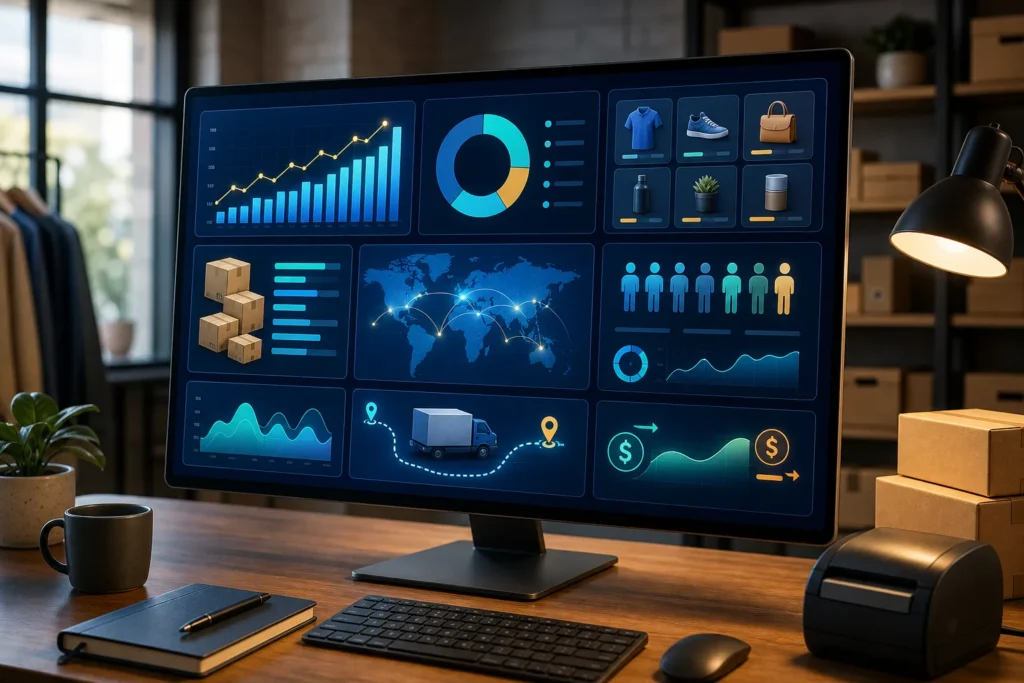
From there, What Business Intelligence Actually Means for a Small Company involves analyzing data against the questions leaders ask, interpreting the results, and presenting comprehensible patterns or trends that can be acted upon. Dashboards provide visual summaries for quickly assessing performance, while structured reports provide detailed, customized information. BI generally assesses current operations; business analytics is more focused on improving future performance, while predictive analytics and forecasting use more advanced techniques to estimate outcomes. A small company can use this approach without pretending it has unlimited time, money, or staff. BI is a data-driven mindset that supports facts and numbers over intuition or guesswork.


Which day-to-day business decisions can BI help a small company make?
Business intelligence can help you make decisions about customer preferences, resource allocation, supply chain management, operational efficiency, and potential risks. What Business Intelligence Actually Means for a Small Company becomes clearer when a sales dashboard shows which products underperform, how regions differ, and when buying patterns justify an inventory or pricing change. What Business Intelligence Actually Means for a Small Company also includes cash-flow decisions: receivables, payables, liquidity, and real-time spending can be analyzed together.
For customers, the same system can support personalization, pricing, product prioritization, and forecasts of likely churn or upgrades. Knowing the cost of supporting particular customers can also inform competitive and profitable service pricing. A cited HVAC example compared job profitability and shifted priority toward repair work and subcontracted installations; the company’s overall margin rose from percent to percent within six months. That example shows What Business Intelligence Actually Means for a Small Company in action: analysis leads to a work-prioritization decision.
Which data sources and key performance indicators should a small company connect first?
Start with your accounting platform and CRM because those two connections can answer many financial and customer questions. What Business Intelligence Actually Means for a Small Company should begin with useful sources, not every available source. Possible inputs include internal databases, flat files, CRM and ERP systems, point-of-sale and warehouse systems, billing and scheduling platforms, websites, emails, calendars, customer feedback, and external market research.
What Business Intelligence Actually Means for a Small Company also depends on ETL: extraction from multiple sources, transformation into a consistent format, and loading into a warehouse or BI tool. A compact KPI set can cover cash runway, gross margin, accounts-receivable aging, customer acquisition cost, lifetime value, recurring revenue, conversion, satisfaction, resolution time, and churn. Keep a KPI only when a change would alter a decision, then assign it a name, unit, source, target, intervention threshold, and owner.

What features should a small-company BI system include, and how do common BI tools compare?
A small-company BI system should cover data storage, integration, analysis, visualization, dashboards, reports, charts and graphs, sharing, and refresh automation. What Business Intelligence Actually Means for a Small Company is easier to deliver when employees can use self-service interfaces without extensive analytical training. Shared dashboards can show what is on track or needs attention, while automated platforms can identify significant changes, trends, and exceptions.
When comparing tools, assess connectors, ease of use, self-service access, compatibility, scalability, customization, refresh, sharing, security, support, training, and total cost of ownership. The documented examples are not a universal ranking: Tableau supports visualization and KPI analysis; Metabase connects with databases, Google Analytics, and MongoDB while requiring limited SQL; and Geckoboard was initially aimed at small-to-medium-sized companies. What Business Intelligence Actually Means for a Small Company may also mean embedding BI in an existing portal or using a unified metrics platform as a shared source of truth.
| Tool | Documented fit | Documented capability |
|---|---|---|
| Tableau | Visualization and KPI analysis | Connects to various data sources |
| Metabase | Database and analytics connections | Queries can require limited SQL knowledge |
| Geckoboard | Small-to-medium-sized companies | Positioning described in the source |
How much do BI software, setup, and maintenance typically cost for a small company?
The available evidence does not provide a typical small-company BI price range or average license cost. What Business Intelligence Actually Means for a Small Company therefore requires a cost plan rather than an invented budget. What Business Intelligence Actually Means for a Small Company should be priced across software licensing, connectors, implementation time, data integration, training, maintenance, data usage, and premium features.
Vendor pricing varies, and buying several tools can increase the total cost through separate licenses, usage charges, hidden fees, or premium features. Implementation effort can also be substantial: some BI systems take up to a year or more to implement. Start by pricing the smallest useful accounting or CRM connection, one decision-focused dashboard, the training it requires, ongoing ownership, and any external consulting support. That approach makes What Business Intelligence Actually Means for a Small Company financially testable before you expand the system. What Business Intelligence Actually Means for a Small Company should be judged on useful decisions delivered, not on the size of the software purchase.
What steps can a small company follow to implement BI without building a large data team?
Begin with a business goal and a specific question, identify existing data sources, and select a platform that fits your current needs. What Business Intelligence Actually Means for a Small Company is most manageable as a small pilot: connect accounting and CRM data, clean and standardize it, build one decision-focused dashboard, and expand gradually.
- Use a self-service interface where possible; teams with fewer than three data sources can use scheduled CSV or spreadsheet imports when native connectors are unavailable.
- Have business and IT staff cooperate on definitions, access, and priorities.
- Use the foundation, building, and expansion phases assigned to days 1–30, 31–60, and 61–90 in the cited framework.
- Train employees to use the tool, interpret data, and make data-driven decisions.
What business intelligence Actually Means for a Small Company includes change management, not just installation. AI & Data Consulting Desk can help you plan implementation, BI dashboards, data visualization, and AI or data roadmaps. What Business Intelligence Actually Means for a Small Company works best when the people using the findings help shape the workflow.


What data-quality, privacy, and security risks should a small company consider when using BI?
BI insights are only as dependable as the data being generated, integrated, evaluated, and managed. What Business Intelligence Actually Means for a Small Company needs data-quality controls before dashboards become decision tools. Common problems include duplicate customer records, stale data, incomplete records, and disagreements over metric definitions. Cleansing, validation, standardization, and regular audits help support accurate, complete, and current data.
What Business Intelligence Actually Means for a Small Company also includes privacy and security safeguards, regulatory compliance, access control, and checks on personal mobile-device access. Document each metric definition, assign data owners, limit access, check refreshes, and educate staff on data-quality protocols. A data-security or compliance consultant may help manage security and regulatory compliance. The cited article states that a single data breach can cost $4.5 million to resolve, according to IBM. What Business Intelligence Actually Means for a Small Company should therefore include governance alongside analysis.

How can a small company measure whether its BI investment is delivering a worthwhile return?
Measure BI by decisions and outcomes, not dashboard views. What Business Intelligence Actually Means for a Small Company delivers value when analysis contributes to cost reduction, margin, cash flow, conversion, retention, acquisition cost, service performance, or time saved. Give every important KPI a target and intervention threshold so the team knows what success means and when action is required.
What Business Intelligence Actually Means for a Small Company should fit existing weekly leadership meetings or monthly operations reviews rather than creating a separate reporting ritual. One cited example found that referral customers had three times higher retention than paid-ad customers, while changes to spending and incentives improved customer acquisition cost by percent. Record the original question, decision, action, measurable result, and ongoing maintenance cost. The available ledger does not provide a universal BI ROI percentage. What Business Intelligence Actually Means for a Small Company is worthwhile only when the evidence changes an action or improves a measurable business outcome.

| Source | Scalability | Integration or fit | Ease of use | Cost |
|---|---|---|---|---|
| theofficegurus.com | scalability | system compatibility | — | — |
| park.edu | scalability | integration with existing systems | ease of use | — |
| domo.com | scalability | data connectors; ecosystem fit | ease of use | total cost of ownership |
| uschamber.com | — | — | — | BI software prices vary by vendor, may include hidden fees or charges for data… |
| Tool | Documented fit | Documented capability |
|---|---|---|
| Tableau | Visualization and KPI analysis | Connects to various data sources |
| Metabase | Database and analytics connections | Supports databases, Google Analytics, and MongoDB; queries can require limited SQL knowledge |
| Geckoboard | Small-to-medium-sized companies | Positioning described in the source |
Key Takeaways
- Start with accounting and CRM data, then expand only when a business question justifies another connection.
- Keep a KPI only when changing it would alter a decision, and assign every KPI a source, target, threshold, unit, and owner.
- Compare BI tools by connectors, usability, compatibility, refresh, security, support, and total cost of ownership rather than by an assumed universal ranking.
- Treat data cleansing, metric definitions, access control, audits, and staff training as part of BI implementation.
- Measure BI through decisions and outcomes such as margin, cash flow, conversion, retention, service performance, or time saved.
Frequently Asked Questions
What is a business intelligence company?
A business intelligence company is not defined in the available evidence as a specific type of organisation. The ledger describes business intelligence as technologies, processes, and strategies for collecting, analyzing, and interpreting data for informed decisions.
What are the biggest business intelligence companies in the USA?
The available evidence does not identify the biggest business intelligence companies in the USA. It names Tableau, Metabase, and Geckoboard as documented BI-tool examples, but it does not rank them or provide a company-size comparison.
What are the top business intelligence tools?
No universal top-five ranking is supported by the available evidence. Documented examples include Tableau for visualization and KPI analysis, Metabase for database and analytics connections, and Geckoboard for small-to-medium-sized companies.
What is a business intelligence system?
A business intelligence system combines data storage, integration, analysis, visualization, dashboards, and reports so a company can use its data for decisions. The system may also automate refreshes and distribute reports when specified conditions occur.